
High-ticket restoration
Paver Cleaning, Sanding & Sealing in Jacksonville, FL
A paver job is only as good as the prep. We clean, restore joint sand, and seal on a proper dry cycle — not a same-day spray.
THE SURFACE. THE JOINTS. THE FINISH.
Clean. Sand. Seal.
Know what is underfoot.
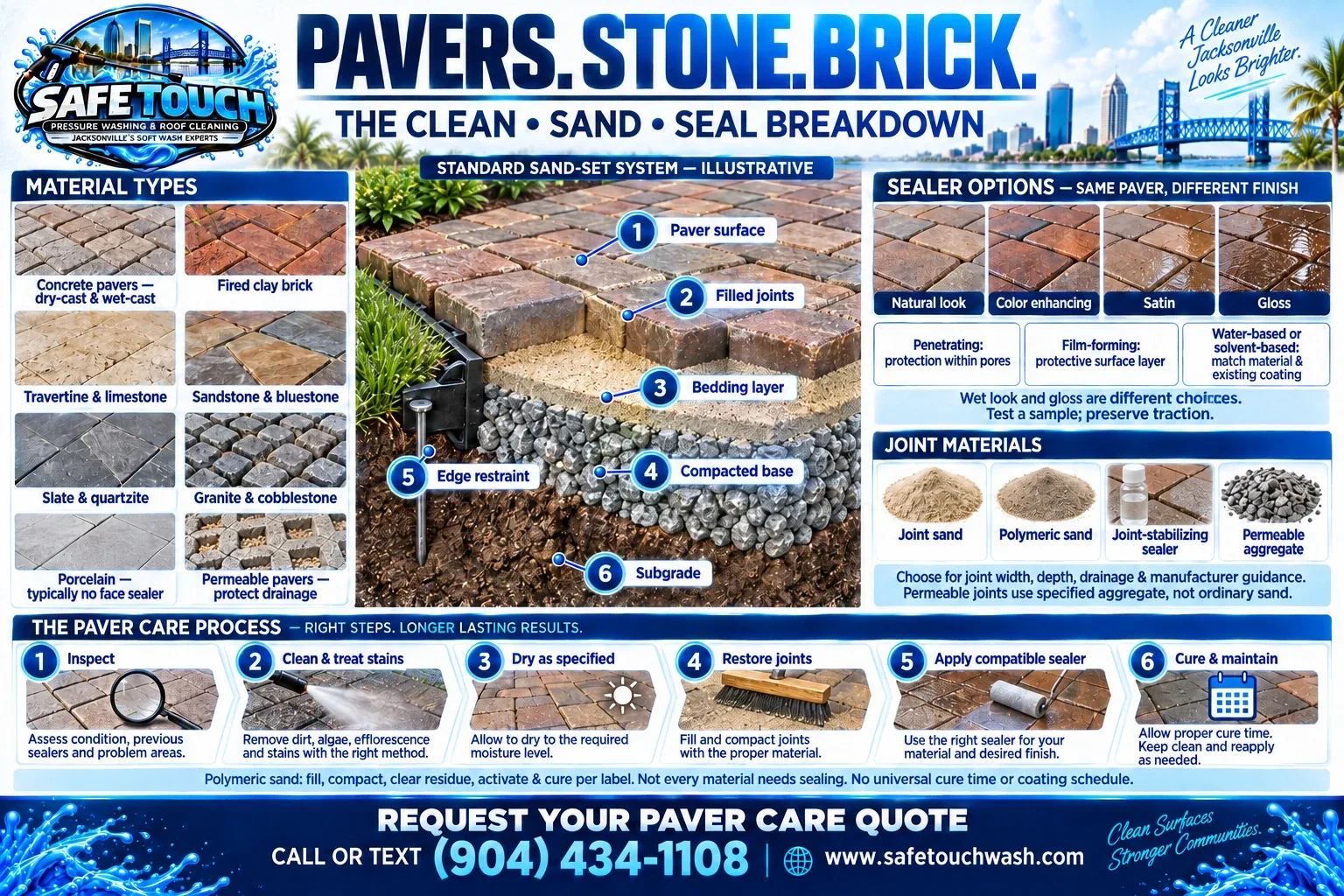
Explore paving materials, joint options and sealer finishes in the breakdown. Then see Safe Touch project photos and find answers to the questions that matter before your next paver-care visit.
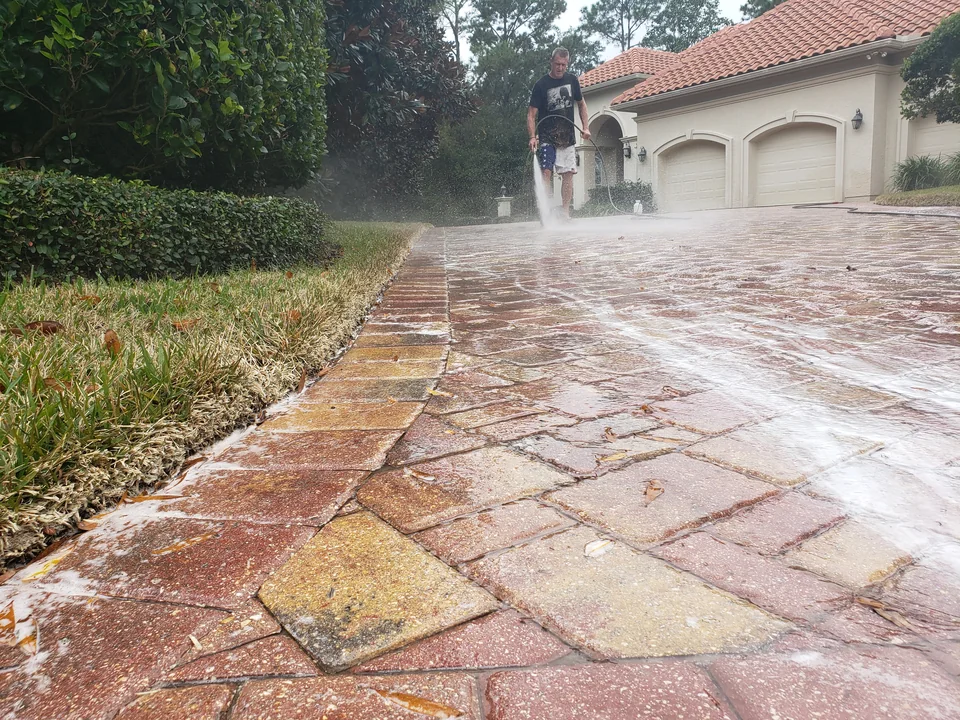
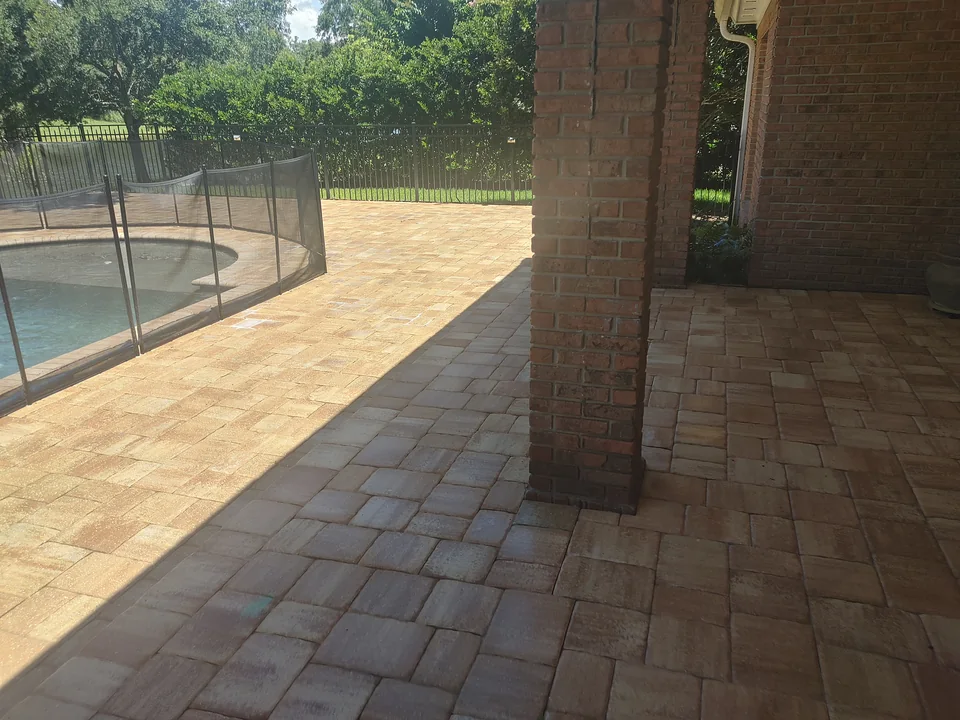
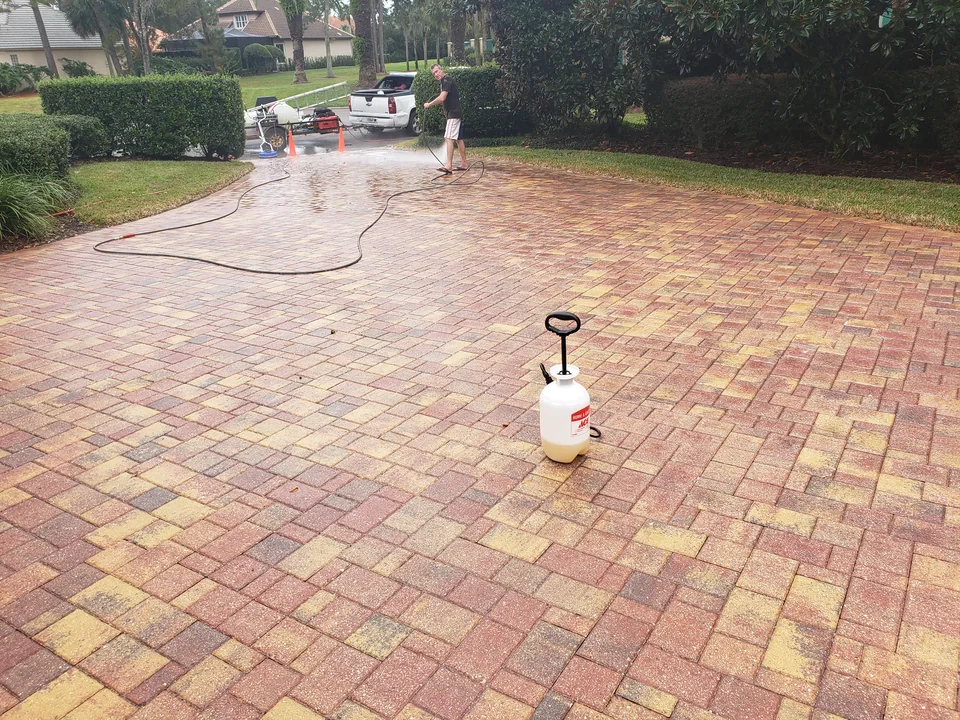
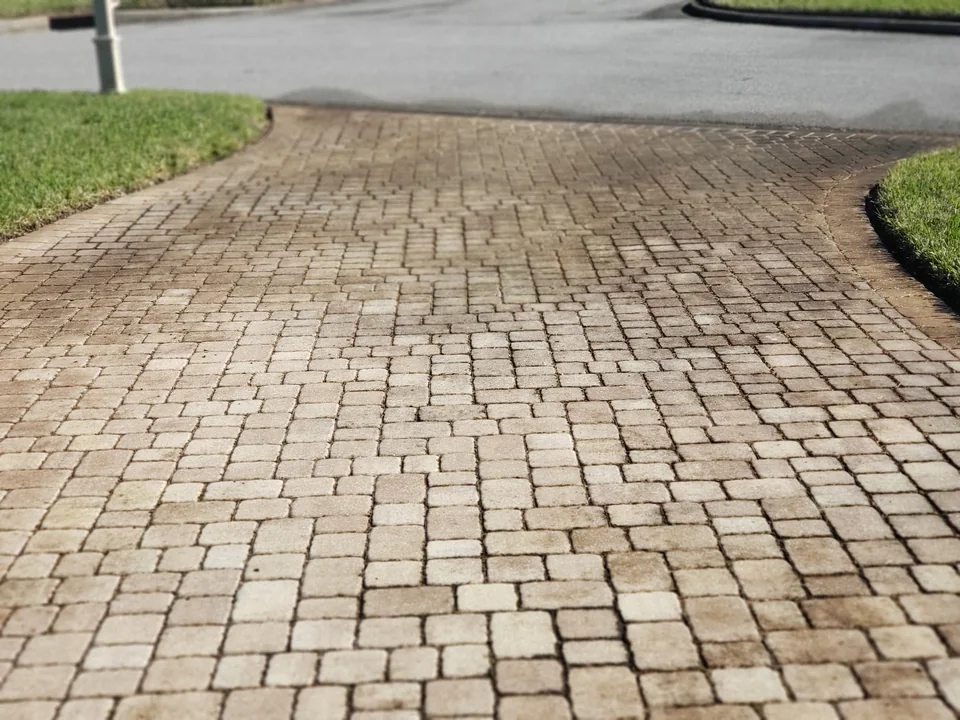
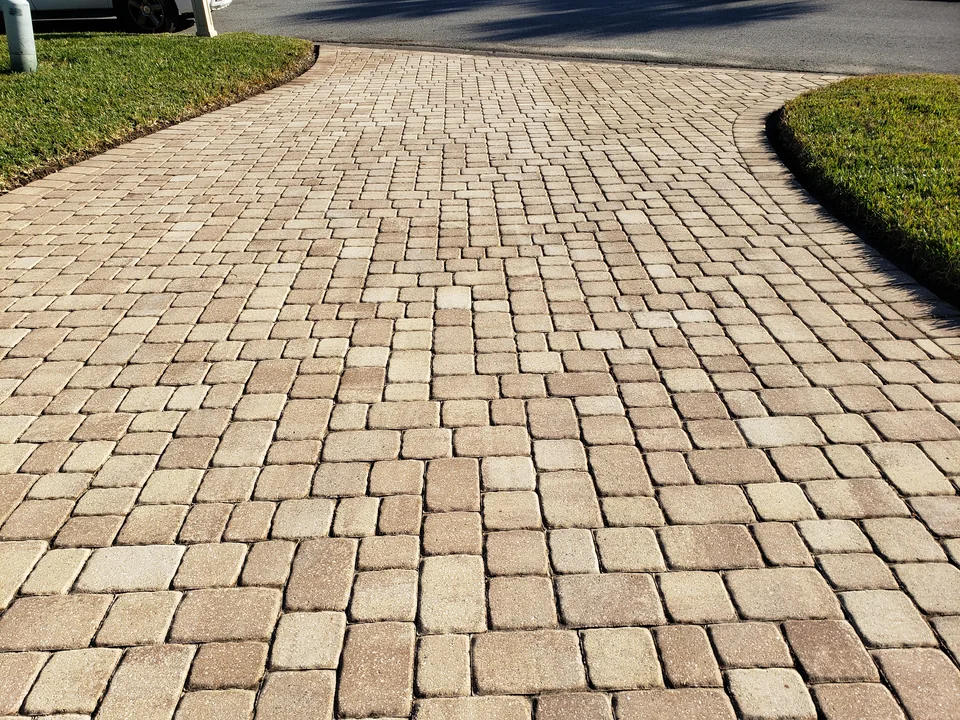
MORE THAN A FINISH
Good preparation.
A suitable protection system.
We assess the paving material, joint condition, drainage and existing coating. Cleaning, restoring joints and choosing a finish each have a purpose. Drying and cure times follow the selected products and the weather.
Talk with Chuck about your pavers →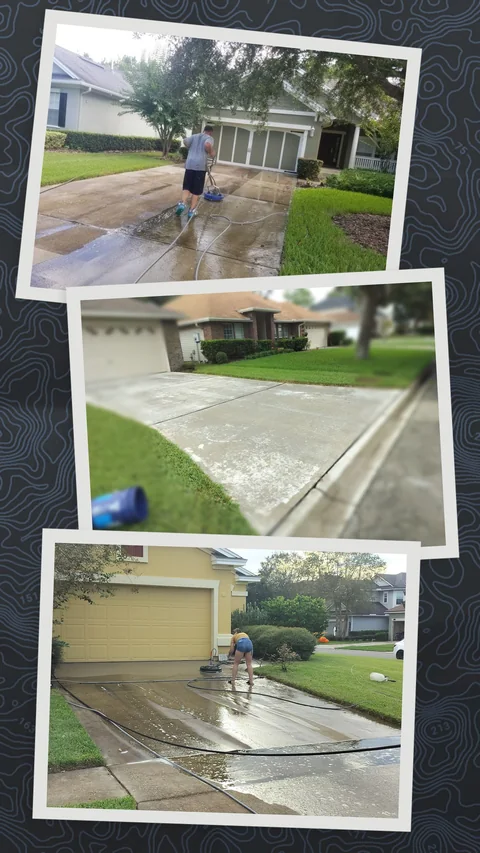
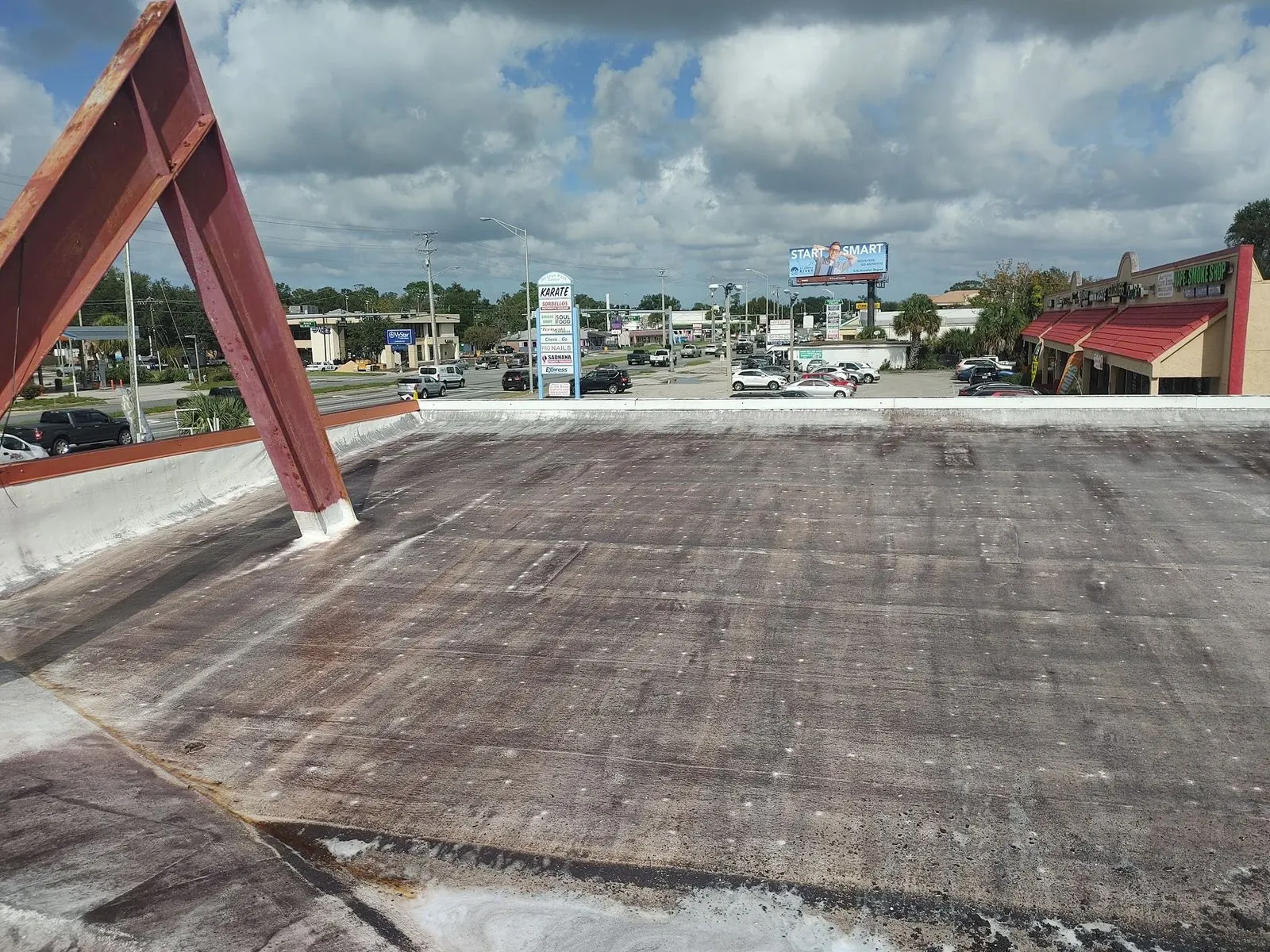
These project photos show our concrete cleaning work. Concrete slabs have their own cleaning approach.
Explore concrete cleaning →Learn more: CMHA paving care · Techniseal joint sand · Belgard maintenance
Planning range
Paver sealing estimator
Jacksonville clean-sand-seal work typically runs $1.75–$3.25 per square foot in 2026. Failed sealer that has to be stripped sits higher. This is a planning number, not a bid.
Northeast Florida is hard on pavers. UV, salt air, afternoon storms, and joint washout fade the color and let weeds in. Sealing without a real clean and a real sand job just locks dirt in.
Safe Touch treats paver care as its own trade. We inspect the material, drainage and existing coatings, clean organic growth and contamination, restore suitable joint material, and apply compatible protection where appropriate. Moisture conditions and waiting periods follow the selected products and the weather.
Typical First Coast driveways land in the $1.75–$3.25 per square foot range for a full clean, sand, and seal. Failed sealer that has to be stripped first sits higher. Use the estimator below the diagram for a planning range, then we’ll walk the property and quote the job you actually have.
We seal pavers in Ponte Vedra Beach, Nocatee, Jacksonville, St. Johns, and the beaches. Sawgrass, Marsh Landing, Twenty Mile, and Mandarin are regular routes — gated access is fine.
- Cleaning, joint restoration, and compatible sealing
- Color-enhancing or natural-look finishes
- Strip failed sealer when it has already peeled
- Driveways, pool decks, patios, and walkways
Paver Cleaning cost in Jacksonville
Ranges are typical First Coast planning numbers, not a bid. Send the address and photos for a written number.
| Job | Typical range | Notes |
|---|---|---|
| Clean, sand & seal | $1.75–$3.25 / sq ft | Driveways, pool decks, patios, and walkways. |
| Strip failed sealer first | Higher than seal range | When the old coat has milky or peeling, prep cost goes up. |
| Color-enhancing finish | Adds to seal range | Wet-look vs natural matte sealer. |
Request
Tell us the address.
We call back with questions, then send a written number. No surprise add-ons after the crew is already in the driveway.
Get your free estimate from Chuck.
Call or email your property address, the surfaces you need cleaned and any photos. Chuck will reply with the next step.
Call (904) 434-1108Email ChuckQuestions about paver cleaning, sanding, and sealing
Do concrete pavers, clay brick and natural stone need the same treatment?+−
No. Concrete, fired clay, travertine, limestone, sandstone, slate, quartzite and granite differ in porosity and finish. We identify the material and existing coating before choosing a compatible cleaning and protection system.
Why restore the sand between pavers?+−
Joint material helps the paving system work as intended. Missing or unsuitable material can allow movement and collect debris. Sanding does not repair a failing base, drainage problem or damaged edge restraint.
Is polymeric sand always the best choice?+−
It depends on the installation. Joint width, depth, drainage and paving material determine suitability. Polymeric sand must be filled, compacted, cleared from the surface, activated and cured according to its label. Conventional joint sand with a compatible stabilizer is another option.
What goes in permeable paver joints?+−
Permeable systems typically use specified open-graded aggregate. Ordinary sand can interfere with drainage. Their maintenance plan must preserve the system's infiltration function.
What is the difference between penetrating and film-forming sealers?+−
Penetrating products protect within the pores, while film-forming products create a surface layer. Material, existing coatings, moisture conditions and desired appearance guide selection. Not every sealer stabilizes joint sand.
Does wet look mean high gloss?+−
No. Color enhancement and sheen are different choices. Natural look, color-enhancing, satin and gloss options can produce different results. A sample area helps confirm the appearance, and traction matters on pool decks and walkways.
Is water-based or solvent-based sealer better?+−
Neither is universally better. These terms describe the carrier. The product must suit the material, exposure and existing coating; incompatible layers can fail. We evaluate the surface before recommending a system.
How long does cleaning, sanding and sealing take?+−
Timing depends on weather, surface moisture and the selected joint and sealer products. Drying, activation and curing requirements differ. We explain the schedule and when walking, furniture and vehicles can return for the system used.
Does every stone or paver surface need sealing?+−
No. Many porcelain faces do not require a conventional sealer, and fired clay or natural stone should be assessed individually. Some surfaces benefit from compatible protection; others may not need it.
Why do pavers or sealers turn white?+−
White deposits can be mineral efflorescence, residue or a coating issue, including moisture-related clouding. The cause must be diagnosed before cleaning, stripping or recoating. Adding another layer can make the problem worse.
Will sealing permanently prevent weeds and stains?+−
No. Proper joint care and compatible protection can help maintenance, but debris, seeds and spills still need attention. Sealing does not guarantee weed-free joints, remove existing stains or fix settlement.
How often should pavers be resealed?+−
Inspect the surface and follow the product guidance rather than using one fixed interval. Traffic, sun, moisture, cleaning and the existing coating affect wear. Recoating too frequently can cause buildup; repairs or stripping may be needed first.
How is my paver project quoted?+−
Send the property address and photos of the area, joints and any existing coating. Area, material, staining, joint restoration, access and any required stripping affect the written quote. Call (904) 434-1108.
Other work we do
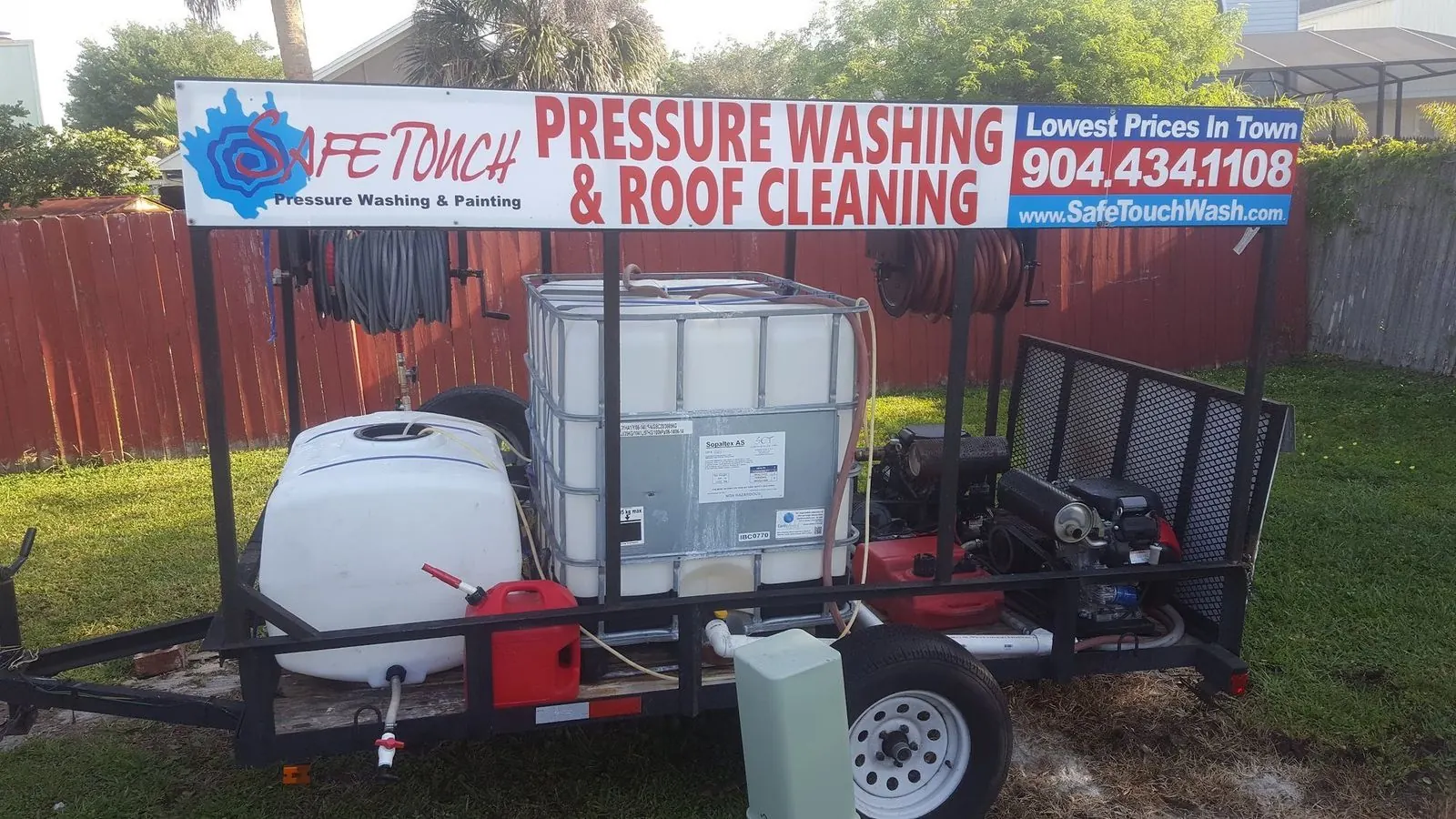
Residential Soft Wash
Low-pressure house washing that removes algae without scarring siding, stucco, or paint.
View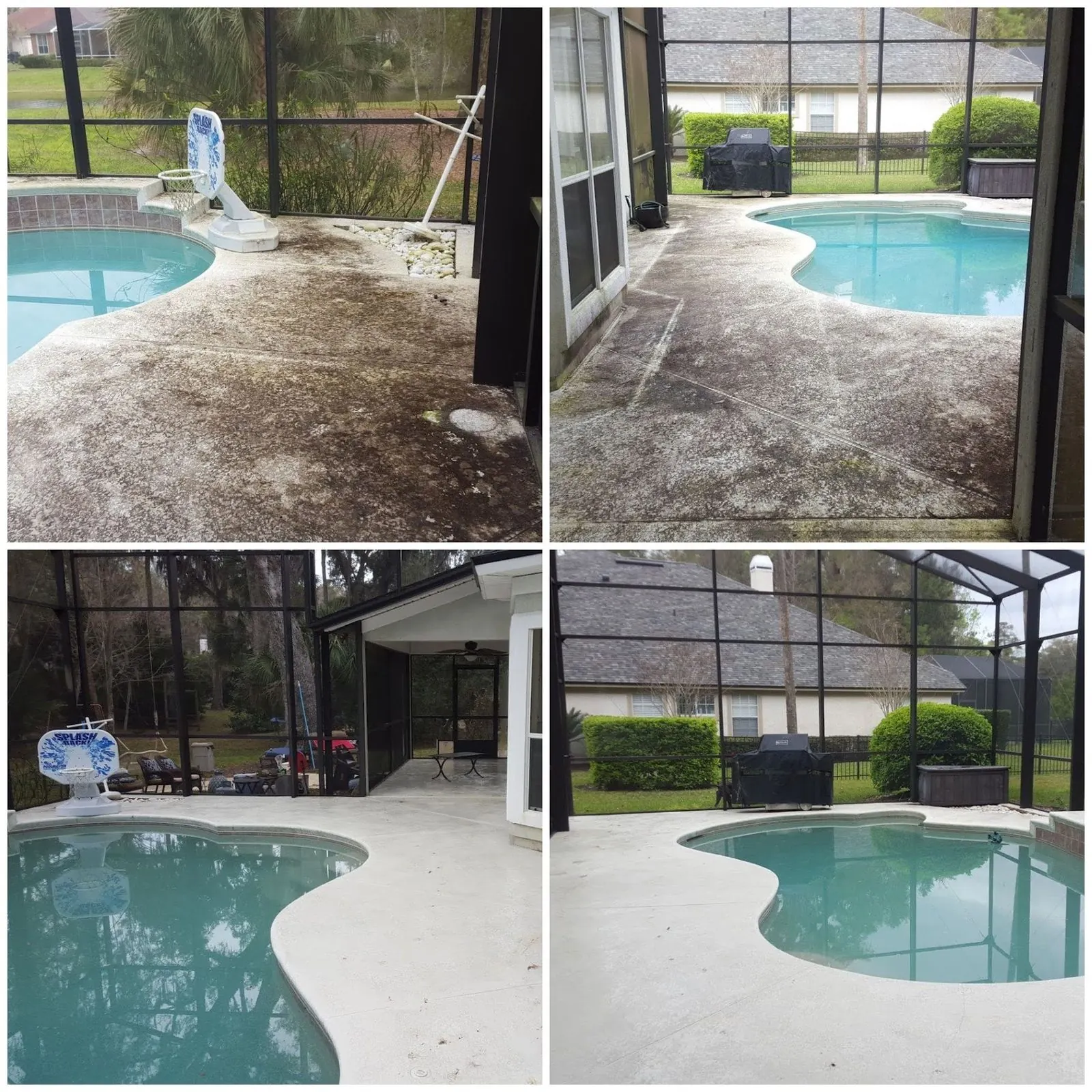
Pool Cage & Screen Enclosure Cleaning
Low-pressure cleaning for Florida pool cages, lanais, screens, frames, and the hardscape inside them.
View
Roof Cleaning
Low-pressure roof washing that kills black algae streaks on tile and shingle without climbing damage.
View