
Storm season playbook
Hurricane season exterior checklist for First Coast homes
Hurricane season runs June 1 through November 30, and the exterior work splits into two jobs: what you do before the storm, and what you wash after it. Salt water, tannin-stained debris, and gutter sludge all leave marks — and a few things should never touch a pressure washer in the week after landfall.
Published
Before the season, not before the storm
The best storm prep happens in June, not when the cone appears. Clean the gutters and downspouts so a tropical storm's water goes where it should. Wash the roof and house on the normal schedule — a clean surface holds up better, and you will not be calling anyone during the September rush, when every washer in Florida is booked solid.
Document the exterior. Walk the property with your phone and shoot a slow video of every elevation, the roofline from the ground, the driveway, and the fence. Date-stamped condition records are the difference between a smooth insurance claim and a six-month argument.
72 hours out: secure, don't seal
Bring in everything that can fly: patio furniture, umbrellas, grills, pots, hoses, and the basketball hoop. Even Category 1 winds turn a planter into a window-breaker. Trim nothing — a fresh cut limb is a wound an oak does not need right before a soaking, and yard waste left at the curb becomes the neighborhood's debris field.
Do not wash the house the day before landfall. It sounds satisfying, and it is wasted money: the storm will re-deposit everything. Save the wash for after, when it counts.
After the storm: what to wash, in what order
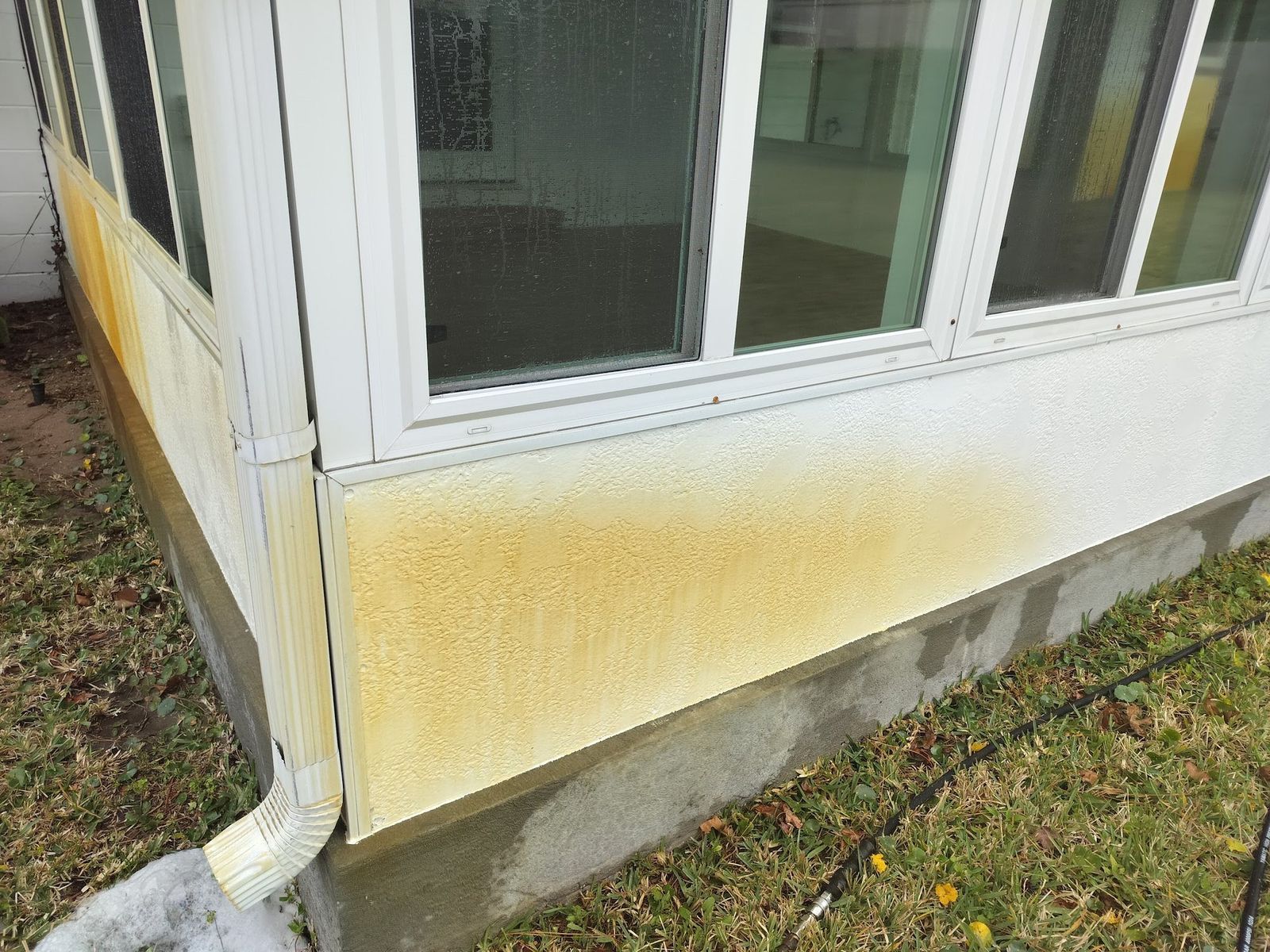
Storm residue has a signature mix: salt film if you saw surge or driving salt rain, tannin staining where leaves and debris sat against concrete, and the usual algae — now fed by a week of standing water. The wash order: house and siding first, then roof treatment if streaks or staining appeared, then driveway and walks, then pool deck and cage.
Two timing notes. If your property flooded, wait until electrical is checked before anyone sprays water around the structure. And mold starts fast in Florida's post-storm humidity — organic staining on siding that sits for a month etches deeper than the same staining washed within a week. Early appointments go first come, and post-storm books fill in a day.
What not to pressure wash after a storm
A roof with visible shingle damage. Water under pressure finds every lifted tab and drives into the deck. That is a roofer's call first, not a washer's. Any surface near damaged electrical — outdoor panels, conduit, pool equipment — waits until an electrician clears it. And resist the urge to blast standing sludge out of the lanai before you photograph it: for insurance, dirty photos are evidence.
If debris is still on the roof, do not let anyone clean 'around' it. One ladder against storm-loosened gutters turns a wash visit into a gutter-repair invoice.
The insurance documentation play
Before anyone washes anything after a named storm: photograph everything, wide shots and close-ups, with something for scale. Your before photos are the claim. Then wash, then photograph again — the same angles. That before-and-after pair, dated, is what gets exterior cleaning covered when adjusters ask whether the staining was storm-related or deferred maintenance.
We take before-and-after photos on every job anyway. After a storm, tell us the photos are for an insurance file and we shoot the sequence properly.